You're not trading—you're picking a fight with your wallet! Don't let small losses turn into a major drawdown

The price has already moved past the stop-loss level originally set.
In front of the trading screen, your heart starts racing, your hand hovers over the mouse, but the mouse pointer just cannot click the close-position button.
You keep thinking: 'Just wait a little longer—maybe it will rebound soon; cutting the loss now would be too regrettable.'
As a result, the market not only failed to rebound but continued to accelerate in one direction.
What was originally just a normal stop-loss of a few hundred dollars gradually turned into a deep loss of several thousand dollars, and eventually even became a blow-up or forced liquidation by the platform.
When reviewing your trades, you may angrily ask yourself: 'I clearly made a strict stop-loss plan before the market opened, so why, when I was actually losing money, could I just not bring myself to cut the loss?'
The biggest problem with this kind of trading situation is that when facing a mistake, we instinctively choose to 'hold the losing position' to fight reality.
Why do we always want to 'hold on a little longer' when facing a loss?
From a psychological perspective, humans are naturally extremely resistant to 'admitting failure' and 'accepting loss.'
Once you exit via stop-loss, the loss becomes an established fact, and the money in the account has truly decreased.
This feeling of pain triggers the brain's defense mechanism.
To escape this pain, we would rather believe in an extremely low-probability event—'as long as I keep holding on, it will always bounce back.'
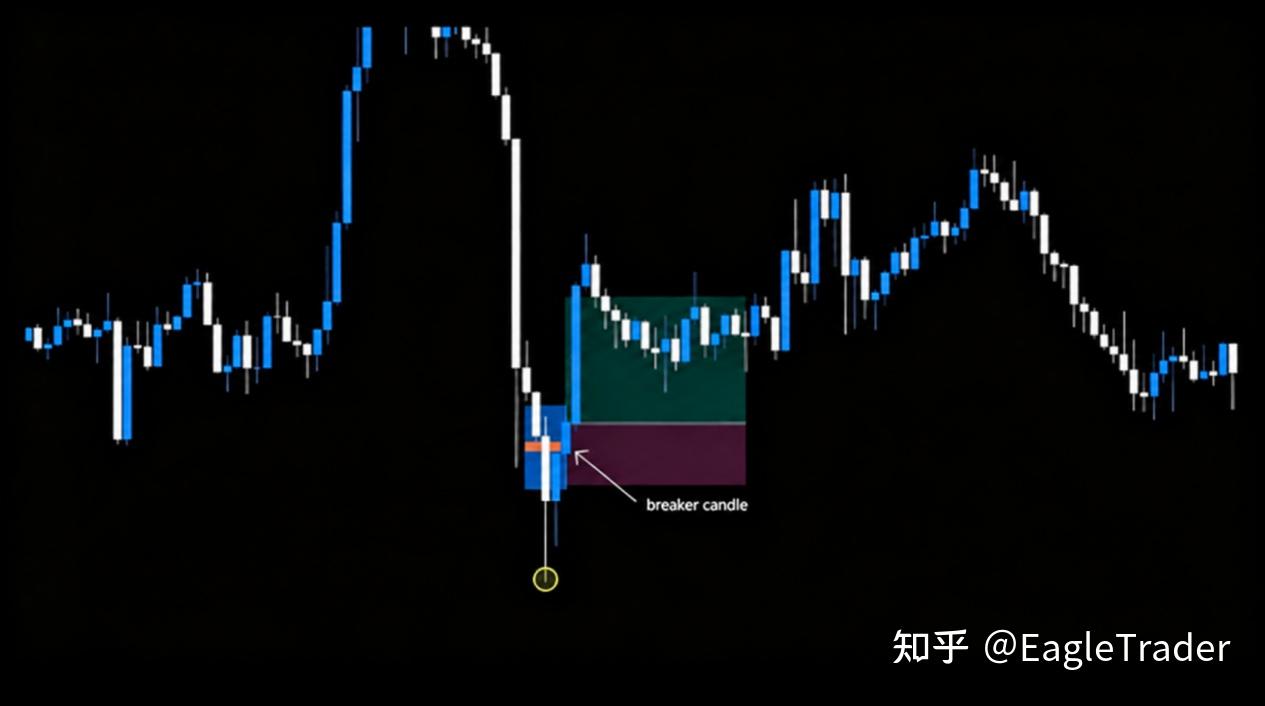
So the nature of trading changes:
It was originally planned trial and error: if wrong, exit and wait for the next opportunity.
Now it has become a sulk against the market: relying on luck and capital to hold on stubbornly, to see whether the market blows up first or my account goes to zero first.
In personal-capital trading, because the money is your own, this 'wishful thinking' is often infinitely amplified.
You always feel that as long as you do not click close, the loss is only a 'book floating loss,' and the money has not really been lost yet.
And it is precisely this extreme aversion to loss that has destroyed the accounts of countless traders.
Holding losing positions with personal capital tortures not only your wallet but also your life
When the floating loss of every deeply trapped position is directly pressing on your personal savings, the chain reaction is all-encompassing.
You may be unable to sleep all night because of a single trade, and feel dazed the next day; or you may become irritable in daily life, with your mind full of the red and green numbers on the chart.
You originally started trading to 'seek freedom,' but ended up becoming a slave firmly bound by the chart.

The essence of stubbornly holding a losing position is the lack of an irresistible external physical boundary.
When emotions run high and wishful thinking takes the high ground, relying entirely on the trader's own restraint to 'cut the position' is often harder than reaching the sky.
And this is one of the reasons why more and more traders are starting to pay attention to proprietary trading (Prop Trading).
Proprietary trading: replace emotion with rules and set boundaries for risk
Proprietary trading will not make market conditions easier, nor will it instantly turn traders into emotionless robots.
What it provides is a completely new trading environment and constraint mechanism.
Under the proprietary trading model, traders do not need to let their personal savings directly bear every violent fluctuation of the simulated account.
When the direct link to funding pressure weakens, the anxiety people feel when facing losses also decreases, giving you a better chance to calm down and examine:
Is this trade really still going according to plan?
Or am I simply afraid of admitting a mistake?
More importantly, mature proprietary trading platforms usually have extremely strict risk rules and drawdown red lines (for example, daily maximum drawdown limits, total drawdown red lines, etc.).
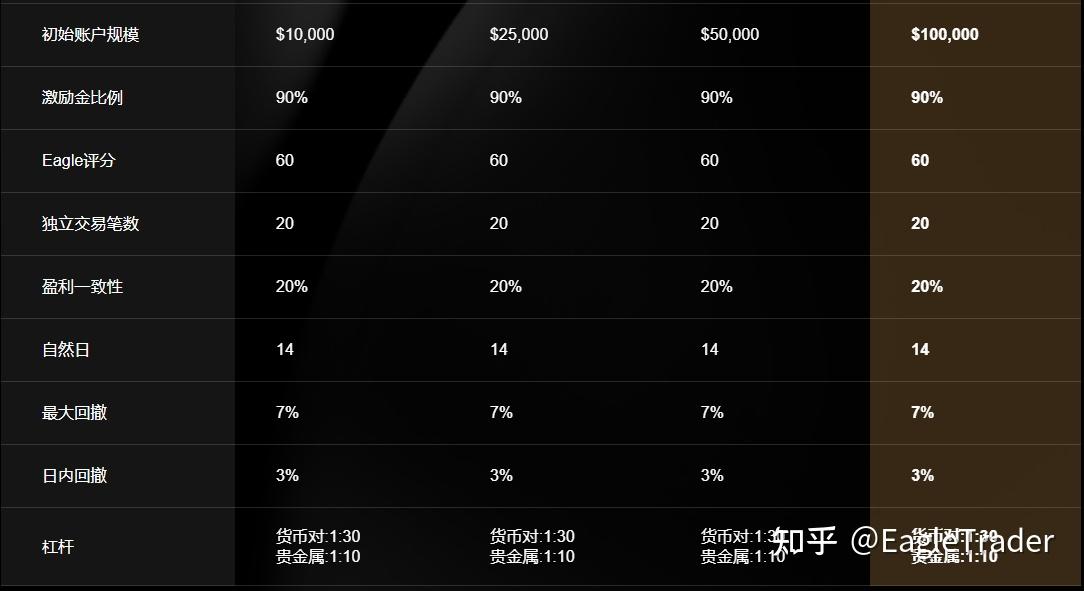
The significance of these rules is not just to assess your performance; it is more like adding a 'safety barrier' for your trading emotions.
When you want to stubbornly hold a losing position and amplify risk, the platform's hard rules will intervene earlier and more harshly than your own restraint, forcing you to stop loss at the right time and preventing a small mistake from turning into an irreversible disaster.
Different participation paths in proprietary trading
As a proprietary trading service provider, EagleTrader aims to provide traders with different participation paths:
Traditional evaluation model: pass the verification of risk control and profit targets in a simulated account, and enter the profit-sharing stage after meeting the standards.
EagleTrader Max (Instant Account): for traders who want to reduce upfront evaluations and enter profit-sharing live trading earlier, there is no need to go through multiple rounds of target verification; after obtaining the account, you can directly start the profit-sharing stage.
No matter which path is chosen, EagleTrader does not let traders 'play freely.'
Through clear risk requirements, the Eagle score, and profit-sharing conditions, the platform constantly observes and regulates trading performance.
When you face floating losses on the charts, harbor wishful thinking, and hesitate over whether to hold a losing position, these rules act like a mirror reminding you: here, you cannot survive on spite; you must rely on discipline and rules.
Proprietary trading gives you not only an account to showcase your ability, but also a strong constraint that helps you break the bad habit of “stubbornly holding losing positions.”
Losses are an unavoidable cost in trading, as natural as breathing.
What truly needs to be avoided is letting an ordinary trial-and-error trade turn into “stubbornly holding a losing position” that crushes the entire account.
The value proprietary trading can provide is to help shield you from some of the anxiety over your principal and use clear rules to force you to draw clear risk boundaries.
Losses can happen, but the next trade should always begin with a decisive stop-loss and a brand-new plan.
Ready to take on EagleTrader Max?
No upfront evaluation stage. Trade immediately once funded, with up to 90% profit split.